Table of Contents
- Introduction: Why Brain Regulation Matters
- Quick Primer on Neurofeedback Principles
- How Neurofeedback Measures Brain Activity
- Training Protocols and Modalities Explained
- Common Session Flow and What Clients Can Expect
- Who Is Likely to Benefit and Contraindications
- Evidence Snapshot: Key Studies and Limitations
- Integrating Neurofeedback with Psychotherapy Approaches
- Practical Setup and Safety Considerations
- Anonymized Case Vignettes: Outcomes and Lessons
- Frequently Asked Questions and Myths Debunked
- Resources, Suggested Readings and Implementation Tools
- References and Suggested Further Research
Introduction: Why Brain Regulation Matters
Our brain is the command center for everything we think, feel, and do. When its intricate networks operate in harmony, we experience focus, emotional stability, and resilience. However, stress, trauma, or developmental challenges can lead to brainwave dysregulation, contributing to conditions like anxiety, ADHD, depression, and insomnia. The core issue is often a nervous system stuck in overdrive or under-arousal. This is where Neurofeedback emerges as a powerful, non-invasive tool designed to help the brain learn to regulate itself more effectively, paving the way for improved mental health and cognitive performance.
Instead of addressing symptoms through external means, Neurofeedback works from the inside out. It is a form of biofeedback that uses real-time displays of brain activity to teach self-regulation. By providing the brain with a direct “mirror” of its own activity, it empowers individuals to guide their brainwave patterns toward more optimal states. This guide serves as a comprehensive overview for both individuals considering this therapy and clinicians looking to integrate it into their practice.
Quick Primer on Neurofeedback Principles
At its heart, Neurofeedback is a learning process based on the principles of operant conditioning. Think of it like learning to ride a bike. At first, you wobble and fall. But with practice, your brain makes tiny adjustments until balancing becomes automatic. Neurofeedback applies this same learning principle directly to your brainwaves.
The process works in a simple feedback loop:
- Measure: Non-invasive sensors are placed on the scalp to measure electrical activity in the brain, known as an electroencephalogram (EEG).
- Process: Sophisticated software analyzes these brainwaves in real time, identifying patterns that are either helpful or unhelpful for the individual’s goals.
- Feedback: When the software detects the brain producing a more desirable pattern, it provides positive reinforcement. This feedback can be auditory (a pleasant tone) or visual (a video game character moving forward, a movie screen getting brighter).
- Learn: The brain, being a highly adaptive organ, naturally wants to receive this reward. Over successive sessions, it learns to produce the desired brainwave patterns more consistently, even without the feedback. This new, more regulated state becomes its default mode of operation.
This training helps the brain become more flexible and resilient, allowing it to shift states more appropriately in response to life’s demands. It is not about forcing the brain into one “perfect” state but enhancing its ability to self-regulate.
How Neurofeedback Measures Brain Activity
The foundation of Neurofeedback is the ability to accurately measure brain activity. This is done using an EEG, which records the tiny electrical impulses generated by firing neurons. These collective rhythms are categorized into different frequencies, or brainwaves, each associated with different states of consciousness and function.
- Delta (0.5-4 Hz): Dominant during deep, dreamless sleep. Essential for physical restoration and healing.
- Theta (4-8 Hz): Associated with drowsiness, deep meditation, and the state between waking and sleeping. Also linked to creativity and insight, but excess theta during waking hours can manifest as inattention (common in ADHD).
- Alpha (8-12 Hz): The state of relaxed, calm alertness. Present when you are awake but relaxed with your eyes closed. It is a bridge between the conscious and subconscious mind.
- Beta (12-38 Hz): The brainwave of active thinking, focus, and problem-solving. However, high-amplitude beta is often associated with anxiety, rumination, and stress. A specific band within Beta, called Sensory-Motor Rhythm (SMR, 12-15 Hz), is linked to calm focus and bodily stillness.
- Gamma (38-100+ Hz): The fastest brainwaves, associated with peak performance, high-level information processing, and binding our senses into a single, coherent experience.
A practitioner often begins with a brain map, or Quantitative EEG (QEEG), which is a comprehensive assessment that compares an individual’s brainwave patterns to a database of age-matched, neurotypical individuals. This map helps identify specific areas of dysregulation and informs the creation of a personalized training protocol.
Training Protocols and Modalities Explained
Not all Neurofeedback is the same. A “protocol” is the specific training plan designed to address a client’s unique brain map and symptoms. It dictates which brainwaves to reinforce (reward) and which to inhibit (discourage) at specific locations on the scalp.
Several modalities exist, each with a different approach:
- Frequency/Amplitude Training: This is the most traditional form. It focuses on increasing or decreasing the power (amplitude) of a specific brainwave frequency. For example, a protocol for ADHD might involve inhibiting slow-wave Theta activity while rewarding faster SMR or Beta waves to improve focus.
- Z-Score Training: This advanced modality compares the client’s brain activity to a normative database in real time. The goal is to train the brain to move its patterns closer to the average, or “norm,” for their age. It allows for training multiple variables at once, making it a highly dynamic and efficient approach.
- Low-Energy Neurofeedback System (LENS): This is a passive form of neurofeedback where a very weak electromagnetic signal is delivered to the scalp, mirroring the brain’s own dominant frequency. This is believed to help “unstick” rigid, dysfunctional patterns and improve brain flexibility.
- Loreta (Low Resolution Electromagnetic Tomography) Neurofeedback: This is a cutting-edge technique that uses data from multiple sensors to create a 3D model of brain activity. It allows for training deeper brain structures and networks, such as the cingulate gyrus or insula, which are crucial for emotional regulation and self-awareness.
Common Session Flow and What Clients Can Expect
A typical Neurofeedback session is a calm and straightforward experience. While protocols vary, the general flow remains consistent.
- Check-In: The session begins with a brief conversation with the clinician about progress, recent symptoms, and any changes since the last session. This helps track progress and make minor adjustments to the protocol if needed.
- Sensor Placement: The practitioner will place one or more sensors on the scalp using a special conductive paste. This is a painless process and the paste washes out easily.
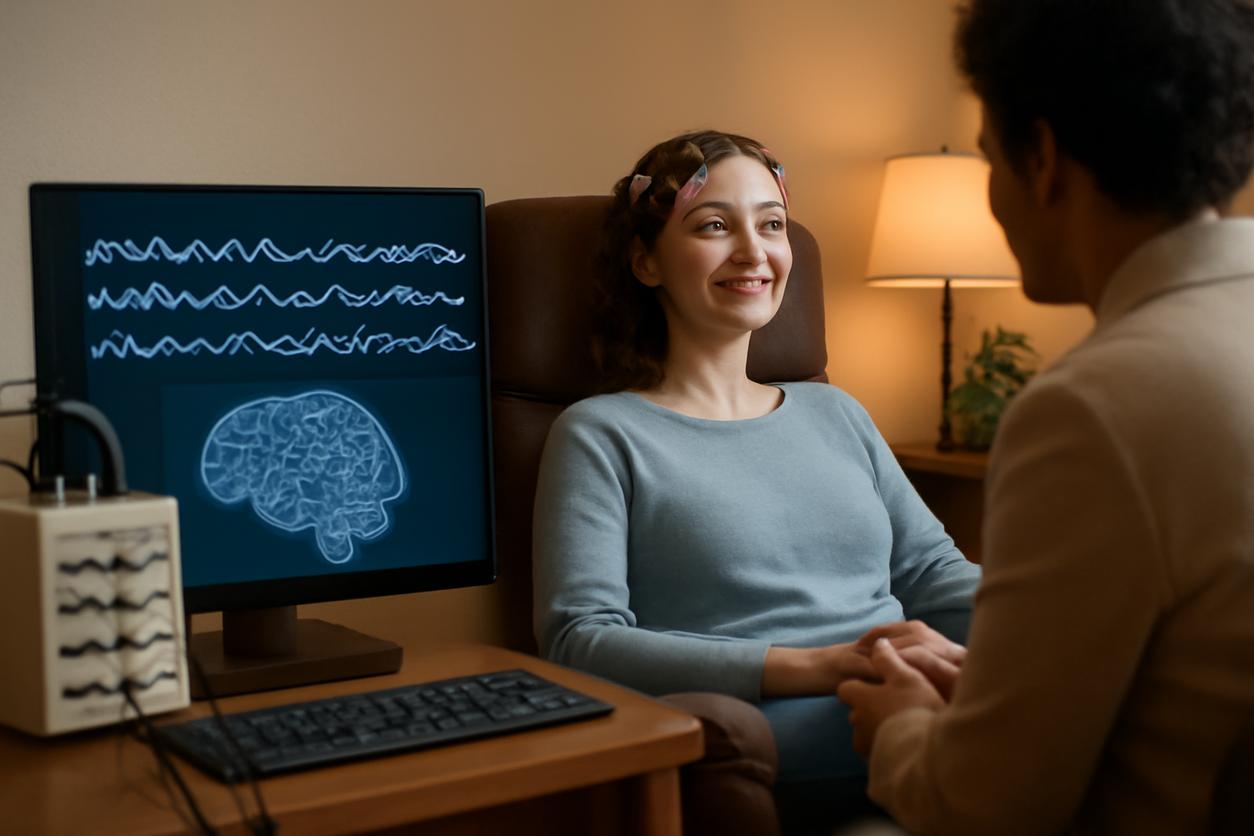
- Training: The client sits comfortably in a chair facing a screen. The training itself is passive from the client’s perspective. They might watch a movie, listen to music, or play a simple video game. The key is that the audio and visual feedback are entirely controlled by their brainwaves. When their brain produces the desired patterns, the movie plays clearly or the game progresses. When it produces unhelpful patterns, the feedback fades.
- Session Duration: The actual training period typically lasts for about 30 minutes. The brain is working hard during this time, even if the client feels relaxed.
- Debrief: After the sensors are removed, there is a brief discussion about the client’s experience during the session. Some people report feeling more relaxed or focused immediately after, while for others the effects are more cumulative over time.
Who Is Likely to Benefit and Contraindications
Neurofeedback has been used to address a wide range of conditions rooted in brain dysregulation. While not a cure-all, it can be a highly effective intervention for many individuals.
Conditions that may benefit include:
- Attention-Deficit/Hyperactivity Disorder (ADHD)
- Anxiety Disorders and Panic Attacks
- Post-Traumatic Stress Disorder (PTSD) and Developmental Trauma
- Insomnia and other Sleep Disorders
- Depression
- Migraines and Headaches
- Traumatic Brain Injury (TBI) and Concussion Recovery
- Peak Performance Training (for athletes, executives, and artists)
Contraindications for neurofeedback are minimal because it is a non-invasive, learning-based modality. However, it is crucial to work with a well-trained and qualified professional, particularly for individuals with seizure disorders or severe, unstable psychiatric conditions. A thorough initial assessment is essential to determine if neurofeedback is an appropriate and safe choice.
Evidence Snapshot: Key Studies and Limitations
The body of research supporting Neurofeedback has grown significantly over the past few decades. For certain conditions, particularly ADHD, the evidence is robust. Multiple meta-analyses have concluded that neurofeedback is an effective treatment, with some studies showing its efficacy to be comparable to stimulant medication but with more enduring effects.
For other conditions like anxiety, PTSD, and depression, the evidence is promising and growing, though more large-scale, randomized controlled trials are needed to establish it as a first-line treatment. The challenge in neurofeedback research lies in the variability of protocols, equipment, and practitioner skill, which can make studies difficult to compare. To explore the current state of the research for yourself, you can search for comprehensive studies and reviews on platforms like PubMed.
It is important to approach Neurofeedback with a mindset of evidence-based optimism. While it holds immense potential, it is not a panacea. Consumers and clinicians should look for providers who are transparent about the current state of the evidence for a specific condition and who do not make exaggerated claims.
Integrating Neurofeedback with Psychotherapy Approaches
One of the most powerful applications of Neurofeedback is its integration with traditional psychotherapy. It can be thought of as a “bottom-up” approach that stabilizes the nervous system, making “top-down” approaches like talk therapy more effective.
- Cognitive Behavioral Therapy (CBT): A client with a calmer, more regulated brain is better able to access their prefrontal cortex to challenge cognitive distortions and engage in behavioral exercises. Neurofeedback can reduce the physiological arousal that often derails CBT work.
- Trauma-Focused Therapies (e.g., EMDR, Somatic Experiencing): For clients with PTSD, the nervous system is often stuck in a state of hypervigilance. Neurofeedback can help lower this baseline arousal, creating the “window of tolerance” necessary to safely process traumatic memories without becoming overwhelmed.
- Mindfulness-Based Therapies: Neurofeedback can be seen as a form of “technologically-assisted mindfulness.” Alpha-theta training, for example, can help individuals access deep meditative states, enhancing their ability to practice mindfulness and interoception in their daily lives.
By stabilizing brain function, Neurofeedback provides a solid foundation upon which meaningful psychotherapeutic work can be built, often accelerating progress and improving long-term outcomes.
Practical Setup and Safety Considerations
While the principles of neurofeedback are straightforward, its effective and safe application requires specialized equipment and extensive training. A professional setup includes a clinical-grade EEG amplifier, sophisticated software for analysis and feedback, and sensors.
The single most important factor for safety and efficacy is the practitioner. A qualified provider will have a background in a licensed health field (like psychology, medicine, or social work) and will have received certification in neurofeedback. They should be ableto conduct a thorough assessment, develop an appropriate protocol, and interpret the client’s progress. Organizations like the International Society for Neurofeedback and Research (ISNR) maintain directories of certified professionals.
From a client perspective, safety is very high. The EEG sensors are passive; they only read information from the brain and do not transmit any electrical current into it. Side effects are generally mild and transient, such as temporary fatigue or feeling “wired” as the brain adjusts to new patterns. These are typically resolved by adjusting the protocol.
Anonymized Case Vignettes: Outcomes and Lessons
(Note: The following vignettes are composite, anonymized examples to illustrate the process and should not be considered typical results.)
Vignette 1: “David,” a 35-year-old software developer with ADHD.
David struggled with procrastination, an inability to focus on complex tasks, and emotional impulsivity. His QEEG showed excess theta-to-beta ratios in the frontal lobes, a classic marker for inattention. His protocol focused on inhibiting theta and rewarding SMR (12-15 Hz) at the prefrontal cortex. After 20 sessions of Neurofeedback, David reported a significant reduction in “brain fog.” He found it easier to initiate tasks, stay on track during meetings, and was less reactive in stressful situations. The lesson: Targeting specific neural markers of inattention can lead to tangible improvements in executive function.
Vignette 2: “Sarah,” a 42-year-old teacher with generalized anxiety and insomnia.
Sarah experienced constant worry, muscle tension, and difficulty falling asleep. Her brain map revealed excessive high-beta activity in her right hemisphere, consistent with rumination and anxiety. Her protocol involved training to down-regulate this high-beta activity while also using alpha-theta training to promote deep relaxation. Over the course of 30 sessions, Sarah learned to quiet her mind. She reported falling asleep more easily and feeling a general sense of calm that she hadn’t experienced in years. The lesson: Neurofeedback can teach the brain to shift out of a chronic “fight-or-flight” state into a more restful “rest-and-digest” mode.
Frequently Asked Questions and Myths Debunked
Is Neurofeedback a form of mind control?
No. Neurofeedback is a tool for enhancing self-regulation. It doesn’t put anything into the brain or force it to do anything. It simply provides a mirror, allowing the brain’s natural learning capacity to improve its own function. You are always in control.
Are the results permanent?
The brain is learning a new skill. Just like learning to ride a bike or swim, once the skill is learned, it tends to stick. The changes are often long-lasting, though some individuals may benefit from occasional “booster” sessions, especially during periods of high stress.
How many sessions will I need?
This varies widely depending on the individual and the condition being addressed. A typical course of treatment is between 20 and 40 sessions. Some improvement is often noticed within the first 10 sessions. A qualified provider will be able to give a more personalized estimate after an initial assessment.
Is Neurofeedback safe?
Yes, when conducted by a trained professional, it is extremely safe. It is a non-invasive procedure that simply reads brain signals. The most common side effect is mild fatigue after a session, similar to how you might feel after a strenuous mental workout.
Resources, Suggested Readings and Implementation Tools
For those looking to deepen their understanding of Neurofeedback, the following resources are an excellent starting point:
- Neurofeedback Overview: The National Institute of Mental Health (NIMH) provides reliable information on various mental health interventions. While they do not endorse specific treatments, their site is a great resource for foundational knowledge.
- Accessible Primer on EEG Basics: For a clear, scientific explanation of how EEG works, this article from Frontiers in Neuroscience is an excellent resource: A Tutorial on EEG Signals and Their Characteristics.
- Suggested Reading for Clinicians: “A Symphony in the Brain” by Jim Robbins offers a compelling and accessible narrative introduction to the history and potential of neurofeedback.
- Suggested Reading for Clients: “Neurofeedback in the Treatment of Developmental Trauma” by Sebern Fisher provides a deep dive into how neurofeedback can help heal the deepest wounds of the nervous system.
References and Suggested Further Research
The field of Neurofeedback is continuously evolving, driven by advances in neuroscience and technology. As we look toward future strategies in 2025 and beyond, we can anticipate several key developments. Research will likely focus on using machine learning algorithms to create even more personalized and dynamic training protocols. The integration of neurofeedback with other biomarkers, such as heart rate variability (HRV) and genetics, will allow for a more holistic approach to brain health.
Further research is needed to standardize protocols for various conditions and to conduct more large-scale studies that will solidify the evidence base. For clinicians and clients alike, staying informed about the latest research is key to making empowered decisions about this promising modality for mental health and cognitive enhancement.