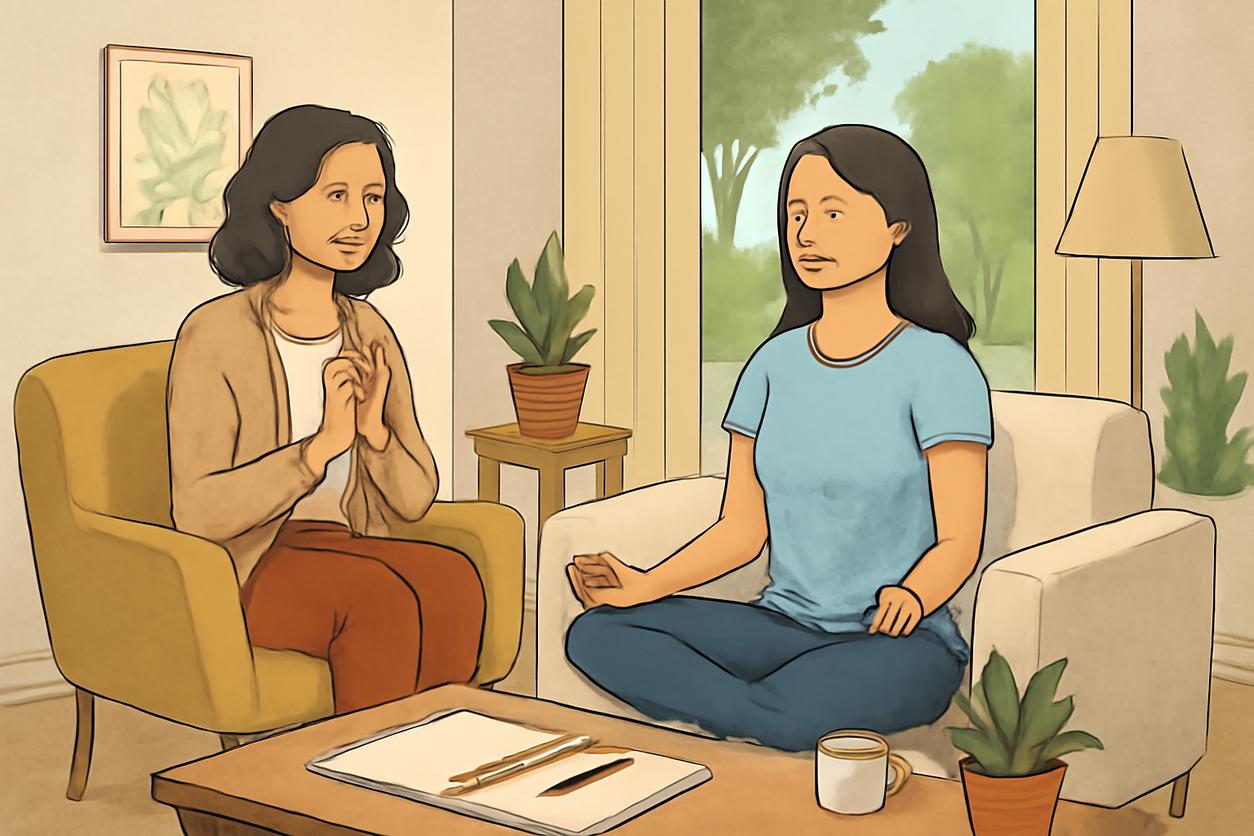
Introduction: A New Lens on Coping Skills
When we hear the term “coping skills,” we often picture a generic list of activities like taking a bath or going for a walk. While these are valuable, the true power lies not in a static list, but in the active, ongoing process of coping skills development. This guide reframes coping as a dynamic and personal journey of building resilience. It is about creating a customized toolkit of small, actionable strategies—or micro-practices—that you can use to navigate life’s challenges, big and small. Instead of searching for a single magic solution, we will focus on cultivating a set of skills that grow and adapt with you, empowering you to manage stress, regulate emotions, and foster a greater sense of well-being.
This guide is designed for beginners and caregivers looking for practical, evidence-informed tools. We will explore simple, effective micro-practices drawn from established therapeutic approaches and provide templates to help you track your progress. The goal is to make coping skills development an accessible and integrated part of your daily life.
Why Coping Skills Matter for Daily Functioning
Life is inherently stressful. From daily hassles like traffic jams and work deadlines to significant life events, stressors are unavoidable. How we respond to these challenges is what makes the difference. Effective coping skills are the bridge between a stressful event and our emotional and physical reaction to it. They are fundamental to protecting and maintaining our overall mental health.
Without a solid foundation in coping, chronic stress can take a toll, leading to burnout, anxiety, and physical health problems. The continuous practice of coping skills development equips you to:
- Regulate Emotions: Instead of being overwhelmed by anger, sadness, or anxiety, you can learn to acknowledge and manage these feelings constructively.
- Reduce the Physical Impact of Stress: Skills like deep breathing can calm your body’s “fight or flight” response, lowering heart rate and blood pressure.
- Improve Problem-Solving: A calm and regulated mind is better equipped to think clearly and find effective solutions to problems.
- Enhance Relationships: By managing your own emotional responses, you can communicate more effectively and navigate conflicts with greater empathy and clarity.
Ultimately, developing these skills is not about eliminating stress but about transforming your relationship with it. It is about building the inner resources to face life’s ups and downs with greater confidence and resilience.
How Coping Skills Develop Over Time
Coping skills development is a marathon, not a sprint. It is a process that unfolds with consistent effort and self-compassion. Just like learning to play an instrument or a sport, you will not become an expert overnight. The key is small, consistent practice. At first, using a new skill might feel awkward or unnatural, but with repetition, it becomes second nature—a reliable tool you can call upon when needed.
It is also important to recognize that your needs will change over time. A coping skill that worked well during one phase of your life may be less effective in another. This is a normal part of the journey. The goal is to build a diverse toolkit so you can select the right tool for the current situation. Be patient with yourself, celebrate small victories, and remember that every attempt to use a skill is a step forward in your personal growth.
Mindfulness-Based Micro-Practices
Mindfulness is the practice of paying attention to the present moment on purpose, without judgment. Research increasingly shows its benefits for stress reduction and emotional regulation. Many mindfulness-based practices can be broken down into simple, accessible micro-practices that help ground you when you feel overwhelmed. These techniques are rooted in approaches like Mindfulness-Based Stress Reduction (MBSR) and are supported by a growing body of mindfulness research.
Belly Breathing
This simple exercise activates the body’s relaxation response.
- Find a comfortable seated or lying position. Place one hand on your chest and the other on your belly.
- Breathe in slowly through your nose for a count of four, feeling your belly expand. The hand on your chest should remain relatively still.
- Hold your breath for a count of two.
- Exhale slowly through your mouth for a count of six, feeling your belly fall.
- Repeat for 1-3 minutes.
The 5-4-3-2-1 Grounding Technique
This technique pulls your attention away from anxious thoughts and into your immediate environment.
- 5: Acknowledge five things you can see around you (e.g., a pen, a spot on the ceiling, your own hands).
- 4: Acknowledge four things you can feel (e.g., the texture of your clothes, the floor under your feet, the chair supporting you).
- 3: Acknowledge three things you can hear (e.g., the hum of a computer, distant traffic, your own breathing).
- 2: Acknowledge two things you can smell (e.g., coffee, soap, or the scent of the room).
- 1: Acknowledge one thing you can taste (e.g., a sip of water, the residual taste of mints, or simply the taste inside your mouth).
Mindful Observation
Pick up a small, everyday object, such as a key, a leaf, or a stone. Spend one minute observing it as if you have never seen it before. Notice its texture, color variations, weight, and temperature. This simple act of focused attention can provide a quick mental reset.
Cognitive Strategies for Managing Thoughts
Derived from Cognitive Behavioral Therapy (CBT), these strategies focus on the powerful link between our thoughts, feelings, and actions. The goal is not to force “positive thinking” but to cultivate a more balanced and realistic perspective. This is a crucial aspect of coping skills development, as it addresses the root of much of our emotional distress: our thought patterns.
Thought Challenging
When you catch yourself in a negative or unhelpful thought loop (e.g., “I am going to fail this presentation”), pause and ask yourself a few gentle, curious questions:
- Is this thought 100% true, without a doubt?
- What is a more balanced or compassionate way to see this? (e.g., “I am nervous, but I have prepared and will do my best.”)
- What evidence do I have that supports this thought? What evidence contradicts it?
- What would I tell a friend who had this thought?
Cognitive Reframing
Reframing is about finding a different, often more helpful, way to look at a situation. It is not about ignoring the negative but about broadening your perspective. For example, instead of thinking, “This traffic is ruining my day,” you could reframe it as, “This is frustrating, but it gives me a few extra minutes to listen to my favorite podcast.” This small shift can significantly reduce feelings of anger and helplessness.
Trauma-Informed Adjustments and Safety Planning
For individuals who have experienced trauma, the journey of coping skills development requires an extra layer of care and safety. A trauma-informed approach recognizes that the nervous system may be highly sensitized, and some coping techniques (like certain breathing exercises or body scans) could be triggering for some. The core principles are safety, choice, and control.
Creating a Sense of Safety
Before trying new skills, establish a sense of safety in your environment. This could involve:
- Creating a Calm Kit: A small box with items that soothe your senses, such as a soft blanket, a scented lotion, a smooth stone, or a calming playlist.
- Identifying a Safe Space: A specific chair, room, or even an outdoor spot where you feel secure and can practice your skills without interruption.
- Using a Grounding Object: Carrying a small, meaningful item in your pocket that you can touch to bring yourself back to the present moment.
The Importance of Pacing
Go at your own pace. Start with the skill that feels easiest and safest. Practice for just one minute at a time. If you start to feel overwhelmed or dissociated, stop immediately. It is okay to take breaks. The goal is to gently expand your capacity for regulation, not to push yourself into distress.
Practical Micro-Practices to Try Today
To make coping skills development more tangible, here is a simple table mapping common feelings to a micro-practice you can try. These strategies for 2025 and beyond focus on simplicity and immediate applicability.
| If You Are Feeling… | A Micro-Practice to Try |
|---|---|
| Overwhelmed and scattered | Use the 5-4-3-2-1 Grounding Technique to bring your focus back to the present moment. |
| Anxious or stressed | Practice one minute of Belly Breathing to calm your nervous system. |
| Stuck in a negative thought loop | Use Thought Challenging by asking, “What is a more compassionate way to see this?” |
| Distracted and unfocused | Try Mindful Observation with an object on your desk for 60 seconds. |
Creating a Simple Tracking Routine
Tracking your efforts reinforces your progress and helps you understand which skills work best for you in different situations. It turns an abstract goal into a concrete practice. This self-awareness is a cornerstone of effective coping skills development.
The ‘Notice-Shift-Rewire’ Method
Use a simple journal or a note on your phone to track your practice. This method helps your brain build new neural pathways.
- Notice: Briefly write down the trigger or the uncomfortable feeling (e.g., “Anxious about a work email”).
- Shift: Note the coping skill you chose to use (e.g., “Did 1 minute of belly breathing”).
- Rewire: Rate how you felt afterward on a scale of 1-10 (1=still very distressed, 10=calm and centered) or jot down a word (e.g., “Felt a little calmer, 6/10”).
Here is a simple template:
| Date | Trigger/Feeling | Skill Used | How I Felt After (1-10) |
|---|---|---|---|
| [Today’s Date] | Stressed about a deadline | 5-4-3-2-1 Grounding | 7 |
| [Today’s Date] | Negative self-talk | Thought Challenging | 6 |
Adapting Practices for Different Life Contexts
The beauty of micro-practices is their adaptability. True coping skills development means learning how to integrate these tools seamlessly into your life.
At Work
Discretion is often key. You can practice belly breathing during a meeting without anyone noticing. Take a two-minute break to mindfully stretch or look out a window. Before sending a difficult email, use a grounding technique to ensure you are responding, not reacting.
In Social Situations
If social events feel overwhelming, excuse yourself to the restroom to do a quick breathing exercise. You can also practice grounding by focusing on the feeling of your feet on the floor or a texture in your hand. Focus your attention fully on one conversation at a time rather than trying to scan the whole room.
With Family or Children
Parenting and family life provide constant opportunities to practice and model coping skills. When a child is having a tantrum, practice co-regulation by taking slow, deep breaths yourself. You can teach children simple skills like “smelling the flower, blowing out the candle” (a form of mindful breathing).
Signs It Is Time to Seek Professional Care
Self-guided coping skills development is a powerful tool, but it is not a substitute for professional mental health care when needed. Seeking help from a therapist or counselor is a sign of strength and a proactive step toward well-being. Consider reaching out to a professional if:
- Your symptoms of anxiety, depression, or stress are persistent and significantly interfere with your ability to function at work, school, or in your relationships.
- The coping skills you have tried do not seem to be helping, or you feel unable to use them consistently.
- You are using unhealthy coping mechanisms (e.g., substance use, avoidance) to manage your feelings.
- You feel a persistent sense of hopelessness or have thoughts of harming yourself or others.
A qualified professional can provide a diagnosis, support, and guidance in developing a more comprehensive and personalized set of coping strategies.
Resources and Further Reading
This article is for informational purposes. For comprehensive information and research on mental health and coping, please consult the following reputable sources:
- World Health Organization (WHO) – Mental Health Overview: Provides global information on mental health conditions, promotion, and care.
- National Center for Biotechnology Information (NCBI) – Stress and Coping Research Hub: A vast repository of peer-reviewed research on the mechanisms of stress and coping.
- NCBI – Mindfulness Research Summary: An article summarizing the scientific evidence on the effects of mindfulness-based practices on health and well-being.