Counselling and therapy for overeating. At Pinnacle take every food disorder seriously, we will work with you to help you understand & overcome your disorder.
Eating disorders can be explained as a negative attitude towards food, severe enough to change the person’s eating habits. Someone suffering from an eating disorder may develop an obsessive habit to monitor their weight and body shape, gaining an unhealthy relationship with food and exercise which may cause damage to their health.
Eating disorders can take the form of overeating, food addiction, emotional eating, binge eating, and food aversion.
The most common eating disorders are bulimia and anorexia. Bulimia is diagnosed when a person attempts to control their weight by inducing vomiting after binge eating. Anorexia is when a person attempts to maintain a very low weight. This is achieved through lack of eating or over-exercising.
At Pinnacle we take each disorder seriously and our specialist eating disorder therapists will work with you to help you understand and overcome your disorder.
Jump to section
Overeating as a food disorder in more detail
Overeating, often referred to as compulsive eating, is when a person loses control over their eating habits, causing them to compulsively overeat. The episode will take place regardless of whether the person is hungry or not.
Overeating can have a huge impact on your mental and physical wellbeing and can often be an emotional response to negative thoughts. We offer counselling and therapy for overeating, we take every food disorder seriously and we will work with you to help you understand & overcome your disorder.
What are the most common signs of overeating?
● Unable to stop eating certain foods, even when not hungry
● Feeling that food controls of your life, not you
● Eating so excessively that it affects your everyday life
● Eating for comfort and to reduce any negative emotions
● Being secretive about your eating habits, for example eating at night
● Experiencing guilt or shame after overeating
● Being unable to concentrate on essential everyday activities and tasks at work and home
● Eating to the point of feeling unwell
● Going to extreme lengths to get hold of food when it’s not readily available
● Eating what most people would regard as an usually large amount of food
If you recognise any of these symptoms or behaviours in yourself or someone you know, you should consider psychotherapy for overeating.
Our approach to compulsive eating disorder
An eating disorder is a sensitive subject and we take the utmost care with our clients. Our aim is to create a safe environment where you can be yourself. Mostly we use talking therapies when treating eating disorders, the primary therapies are Eye Movement Desensitisation Reprocessing (EMDR) and Cognitive Behavioural Therapy (CBT).
We understand that ‘one size doesn’t fit all’ and that each of our clients is different and has their own set of unique needs and circumstances.
Recovery from eating disorders is a slow process, by using EMDR and CBT we can help you come to terms with your situation and set goals and positive outcomes.
EMDR (Eye Movement Desensitisation Reprocessing) therapy was originally developed to treat post-traumatic stress disorders, including experiences of war. It is highly effective for trauma but has since been found to have far reaching applications for many different types of disorders.
How does EMDR therapy for food addiction help?
Some people don’t want to talk about what is troubling them, particularly those suffering from an overeating disorder; it can be difficult to ’open up’ and explore why they are feeling this way. Some people don’t fully know. That’s not a problem with EMDR because it enables us to work blind to the actual issue: sometimes we work with people and treat them without needing to discuss any of the specifics.
EMDR in more detail
Imagine watching a film back in your mind of an incident or trigger which made you anxious, and then pausing it at the worst moment: the part that really encapsulates the trauma or upset you felt. That’s what we get our patients to do, replaying it in their mind. We ask them to notice something in the past, and then notice something in the present. We call it bilateral stimulation.
We do this because the part of our brain that processes that event, the reptilian part of our brain, doesn’t know how to handle the incident or trigger and can’t store it as a memory. EMDR helps to change that.
What actually happens in an EMDR therapy session?
The EMDR therapy stimulates both the left and right sides of the brain, using a range of techniques including hand movements, alternating lights or vibrating sensors, while the client recalls the event which is the cause of the anxiety.
The effect of EMDR is similar to Rapid Eye Movement (REM) sleep, during which the brain makes sense of the day’s events, reprocessing the memory and releasing negative emotions and associations. Our trained EMDR therapists will guide you through the process helping you to work through your particular experiences.
Using CBT for overeating disorder
CBT is a particularly effective therapy for overeating. CBT is about looking at the relationship between your thoughts and feelings, and how they make you ‘default’ to certain behaviours. It’s seen as a different kind of ‘talking therapy’ that aims to solve a person’s current problems. In effect it helps you become your own therapist, where you use the skills you have learned.
By using CBT, your specialist therapist for compulsive overeating will work with you to help make you aware of what your own defaults are – sometimes they help us, sometimes they don’t – CBT helps you recognise those different responses for what they are.
How does CBT help?
What can you expect from an overeating disorder therapy session?
CBT teaches you how to break out of those default patterns to become more resilient in situations you may find uncomfortable or stressful by identifying where you respond negatively and then challenging those negative thoughts with alternative, positive ones.
CBT is a way to rewire the software of your brain, rehearsing troubling situations in your mind in order to create alternative ways of thinking when that situation arises again. In effect, you’re creating new mental circuitry by challenging and changing old responses that feel hardwired in, but aren’t.
With CBT therapy, your therapist acknowledges that there may be behaviours that you cannot control through rational thought. Rather, these harmful coping strategies are as a result of prior conditioning from the environment and other internal or external stimuli.
By taking (what can feel like) insurmountable tasks and teaching you how to apply a pragmatic and objective viewpoint to these issues, CBT gradually changes the way you look at everyday challenges.
Our insurance partners
A charisma boost for confident communicators
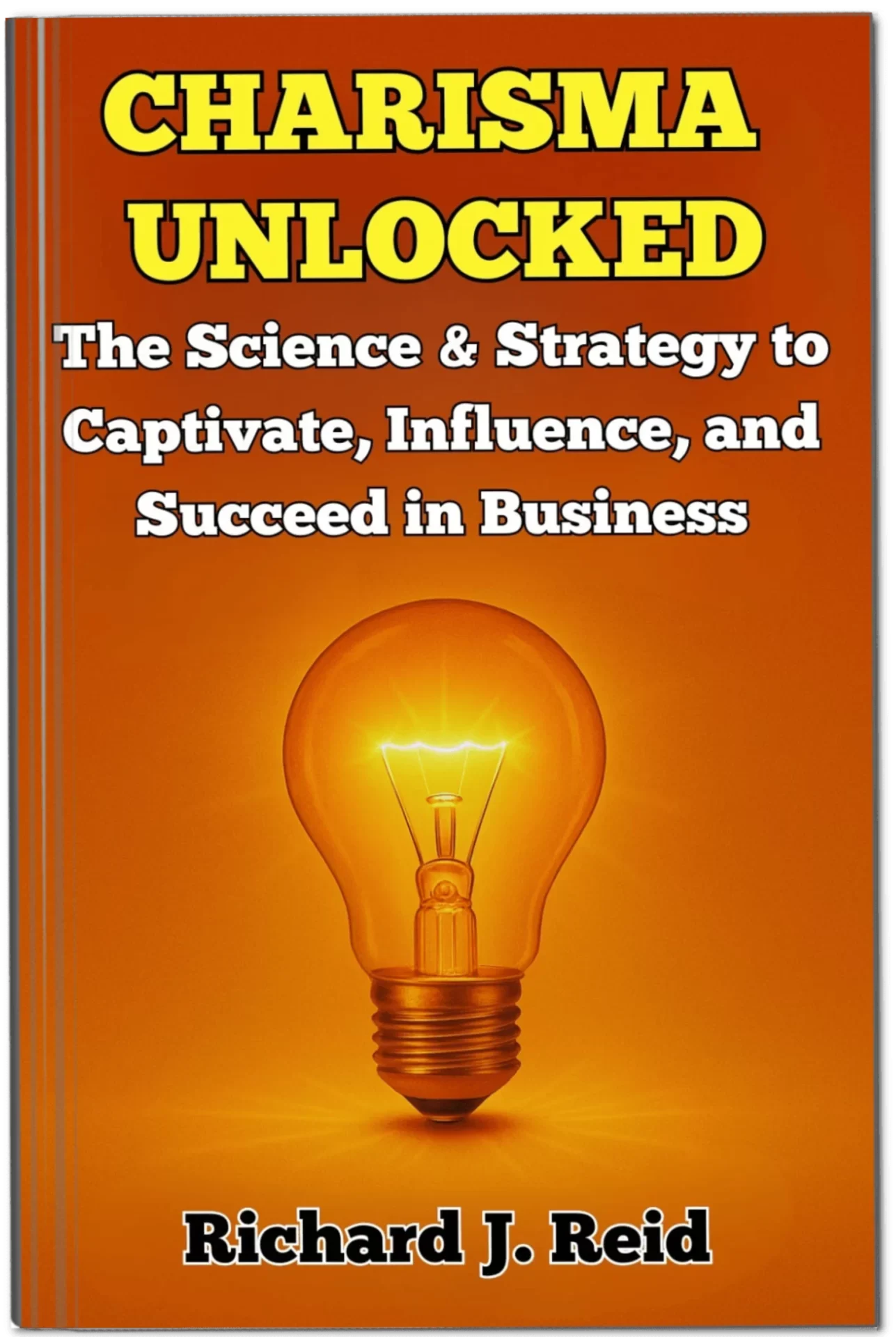
Read Richard Reid’s book: Charisma Unlocked
Are you looking to make a lasting impression in social situations? Do you struggle to connect with others or feel your presence is often overlooked? Unlock your true potential with Charisma Unlocked.
If you feel your ability to communicate or influence is holding you back, this book provides the tools to transform your social skills. With Richard’s expert guidance and proven strategies, you’ll discover how to harness the power of charisma in everyday interactions.
By mastering techniques such as active listening, body language control, and authentic self-expression, you’ll gain the confidence to connect with others and make a powerful impact in both your personal and professional life. Take the first step toward unlocking the magnetic presence within you.